WASHINGTON — The Federal Railroad Administration on Thursday issued a pair of safety alerts related to recent grade crossing accidents that killed railroaders or motorists.
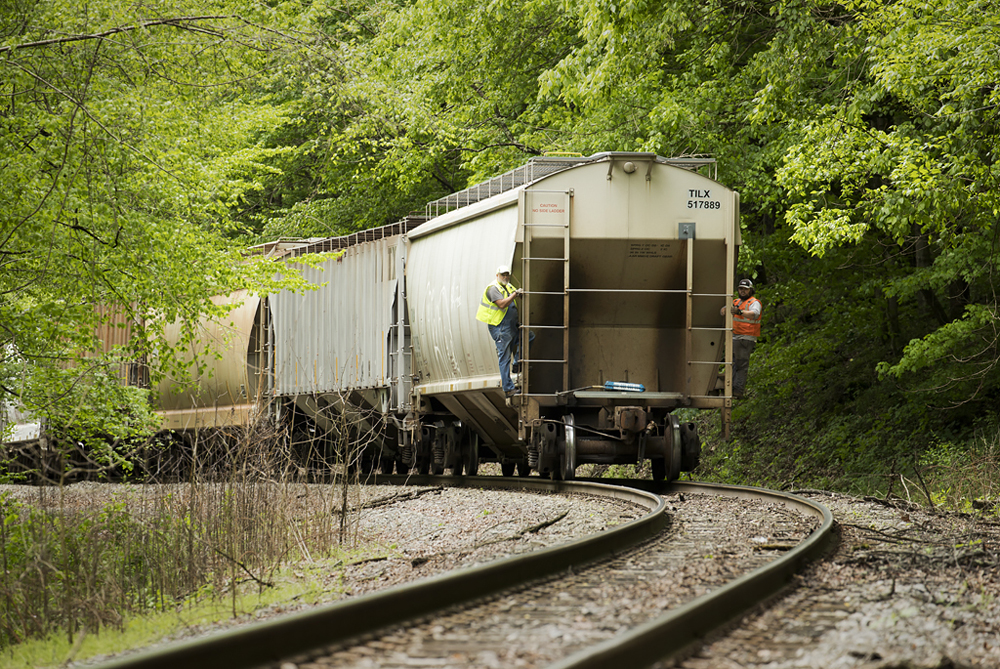
In a safety advisory, the FRA emphasized the importance of crews determining that track is clear prior to making shove movements through crossings that are not protected by gates.
“This advisory focuses specifically on the need for adequate job briefings and visual assessments before railroad equipment traverses a crossing, the action required if a ‘track is clear’ determination cannot be made, and the need for railroads to evaluate certain crossings to determine if it is feasible for an employee riding a shove move to make the track is clear determination,” the advisory said. “Recent accidents demonstrate that railroads and their employees may require additional training and operational testing to ensure sufficient understanding and compliance with ‘track is clear’ procedures, and in some cases operating rules and/or bulletins need to be updated to require stop and flag at certain crossings.”
The advisory comes after a string of fatal accidents since 2020 that killed railroaders who were riding shove movements.
The most recent came this month in Ontario, Calif., when a Union Pacific brakeman riding the leading end of a shove movement on an industrial lead was fatally injured when the train collided with a semi-truck at a crossing equipped only with flashing lights, the FRA said.
The Dec. 4 accident remains under investigation, the FRA said, but preliminary information indicates the brakeman was positioned opposite the remote control operator who was controlling the movement. “Initial findings suggest the train entered the crossing without confirming the track was clear,” the FRA said.
The FRA made four recommendations to railroads:
- Review rules related to shoving movements to ensure compliance with required comprehensive job briefings.
- Review and revise operating rules to ensure they account for all factors in determining when track is clear.
- Review and evaluate operational testing data related to shove movements at grade crossings, identify crossings with only passive protection, and prioritize crossings where there are challenges to making visual assessments of approaching vehicular traffic.
- Railroads should review all crossings that have only flashing lights or passive warnings to determine whether train crew members can reliably see and communicate that the tracks are clear, considering visibility, obstructions, and weather. If a crew member cannot safely make that determination, the railroad should revise its rules to require an employee to be positioned at the crossing to provide protection—such as stopping and flagging traffic.
In a safety bulletin, the FRA said it was investigating a Union Pacific grade crossing accident in Kane County, Ill., that killed the driver of a pickup truck and seriously injured two passengers in the vehicle [see “Driver killed in Elgin, Ill., …,” Trains.com, Nov. 17, 2025]. The crossing’s gates and flashers did not activate before the light engine move — involving a single, six-axle unit — entered the crossing, the FRA said.
“Preliminary information indicates the train crew did not follow required operating rules for traversing highway-rail grade crossings when operating equipment without the minimum number of axles needed to reliably activate grade crossing warning systems,” FRA said.
Grade crossing warning systems can fail, the safety agency noted, if rail equipment does not shunt the approach circuit. “Failure to shunt, also termed loss of shunt, may be caused by multiple factors, including trains with a low number of axles, contaminants on the rail or wheel of the train (including leaves), condition of the rail including rust, and other conditions that cause poor wheel/rail contact,” the bulletin said.
The FRA encouraged railroads to review the bulletin with managers and employees to remind them of the “critical importance of following operating rules and maintenance plans relating to loss of shunt and the proper operation of highway-rail grade crossing warning systems.”
— To report news or errors, contact trainsnewswire@firecrown.com.