





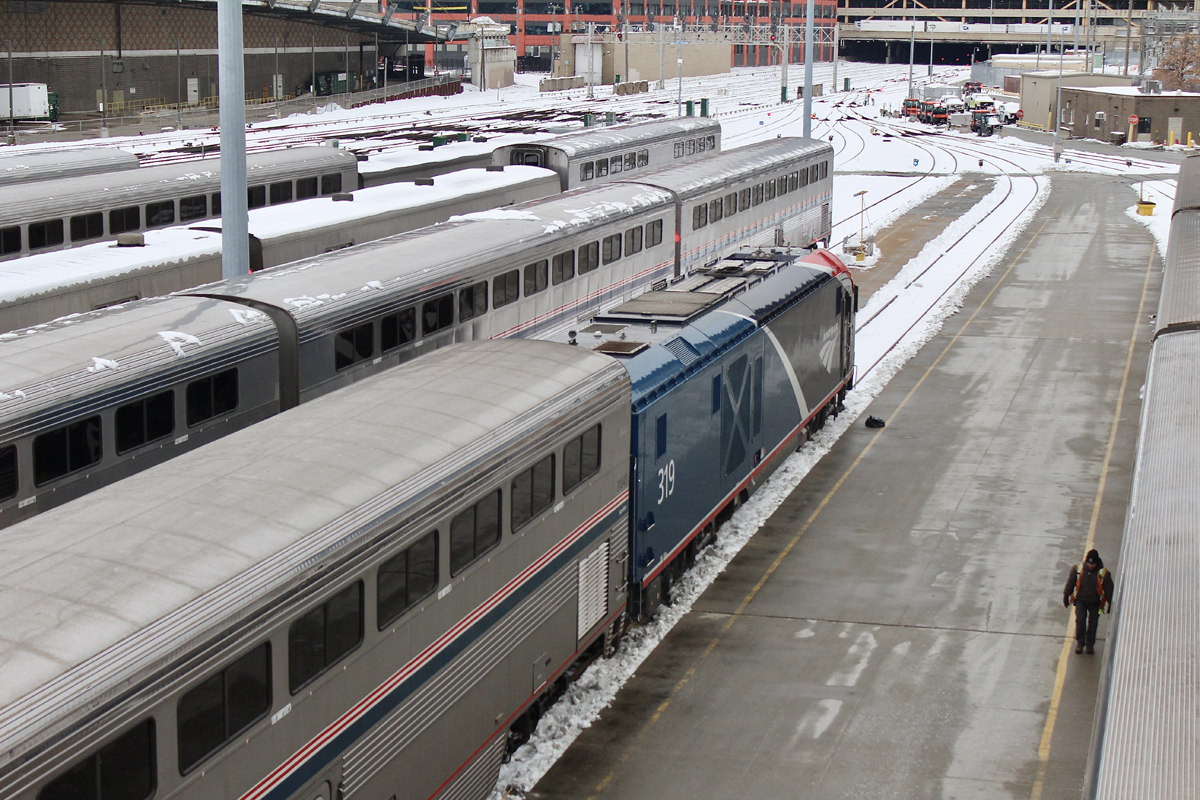
CHICAGO — More evidence of the toll Amtrak’s aging locomotive and passenger car fleet is taking on operations was provided in recent days when long-distance and regional trains were canceled or suffered hours-long delays, most shortly after leaving Chicago.
The common thread? Problems with electrical head-end power.
On Monday, both the westbound California Zephyr and Southwest Chief didn’t make it through the first night of their trips. Their eastbound counterparts, set to utilize the same scarce equipment, have already been canceled: Wednesday’s Chief from Los Angeles and Thursday’s Zephyr from Emeryville, Calif.
One of the first trains to be affected was Monday’s westbound Borealis, which departed Chicago for St. Paul, Minn., at 1:56 p.m. — two hours, 46 minutes late — following “equipment adjustments at the maintenance facility,” according to an Amtrak advisory to passengers.
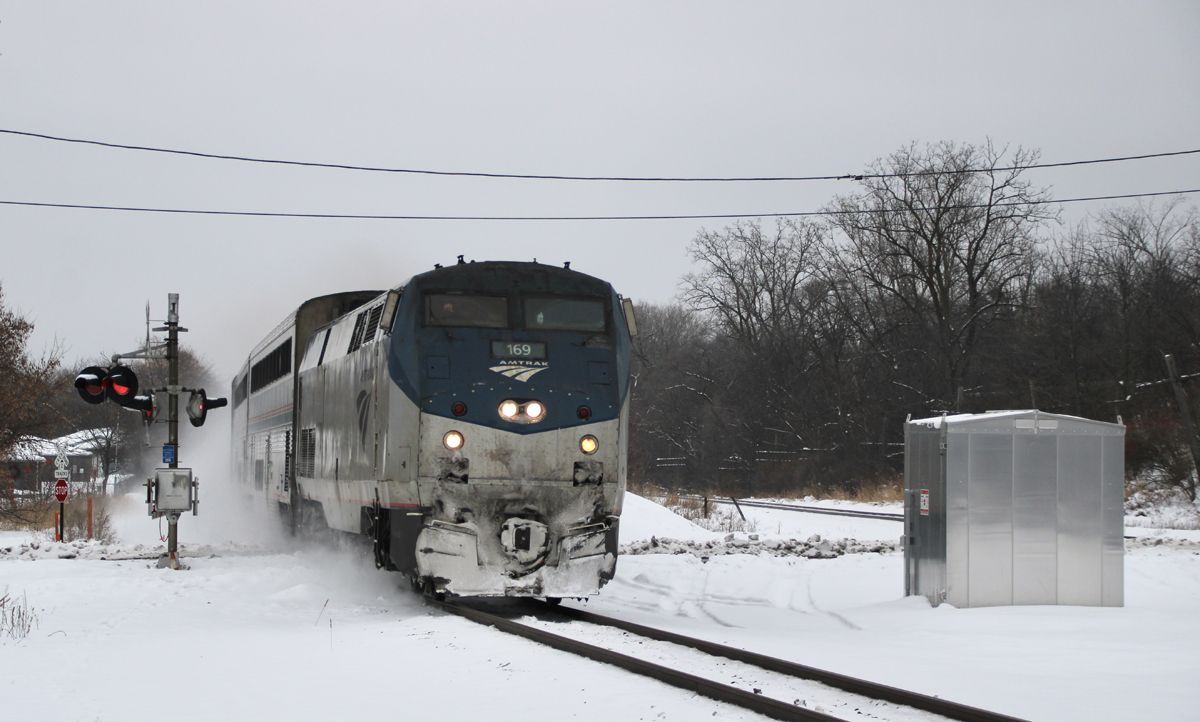
The day’s westbound California Zephyr made it as far as Ottumwa, Iowa, after experiencing recurring problems with one of the train’s passenger cars. Amtrak reports indicate a lengthy delay at Burlington, Iowa, due to “equipment adjustments,” but the train stopped again west of Ottumwa, after departing there at 1:21 a.m., when the train was almost six and a half hours late. As of 3:31 a.m. it was canceled for the rest of its journey to Emeryville.
The same day’s Southwest Chief departed on time behind the Zephyr but didn’t make it to Naperville, Ill., until almost two hours later after undergoing a “locomotive assessment.” West of Fort Madison, Iowa, the train stopped another three hours, “due to a mechanical assessment and an adjustment to the train’s consist, then advanced to the next stop, LaPlata, Mo., “to be further evaluated.” That’s where the train was canceled.
Amtrak says head-end power issues were responsible in both cases. Zephyr passengers were given the choice of returning by bus to Chicago or remaining in Ottumwa until they could continue by train; those who chose to stay were housed by Amtrak. Those on the Chief were taken to Kansas City, where substitute transportation back to Chicago was similarly made available. Both trains were then deadheaded to Chicago.
Passengers will be provided full refunds and other compensation, in addition to housing and meals, along with the company’s apologies, according to an Amtrak spokesman. The railroad is analyzing the cause of the problems.
About the time those issues were unfolding in Iowa and Missouri, Amtrak’s eastbound Floridian made an unscheduled stop at the Hammond-Whiting, Ind., station. The train was shown departing Chicago one minute late at 6:41 p.m. but nearly three hours later had traveled only 16 miles.
First reported as a locomotive “mechanical assessment” at 9:19 p.m., the cause of the delay was soon attributed to “readjusting a coach car to the end of the train.” However, that maneuver took another three hours. Following a mandatory operating crew change, the train reached its first scheduled stop, South Bend, Ind., at 3:36 a.m., some six hours, 27 minutes late.
The Floridian’s delay follows a similar electrical problem that occurred when the westbound Cardinal departing New York on Friday suffered an apparent short in head-end power cables west of Hinton, W.Va., on Friday evening, Dec. 5. The train limped into Charleston, W.Va., an hour late, but the problem couldn’t be fixed.
Passengers were bused overnight from there to all intermediate stops and the equipment deadheaded to Chicago.
— Updated Dec. 10 at 8:22 a.m. to clarify that passengers could return to Chicago or choose to wait to continue by train. To report news or errors, contact trainsnewswire@firecrown.com.


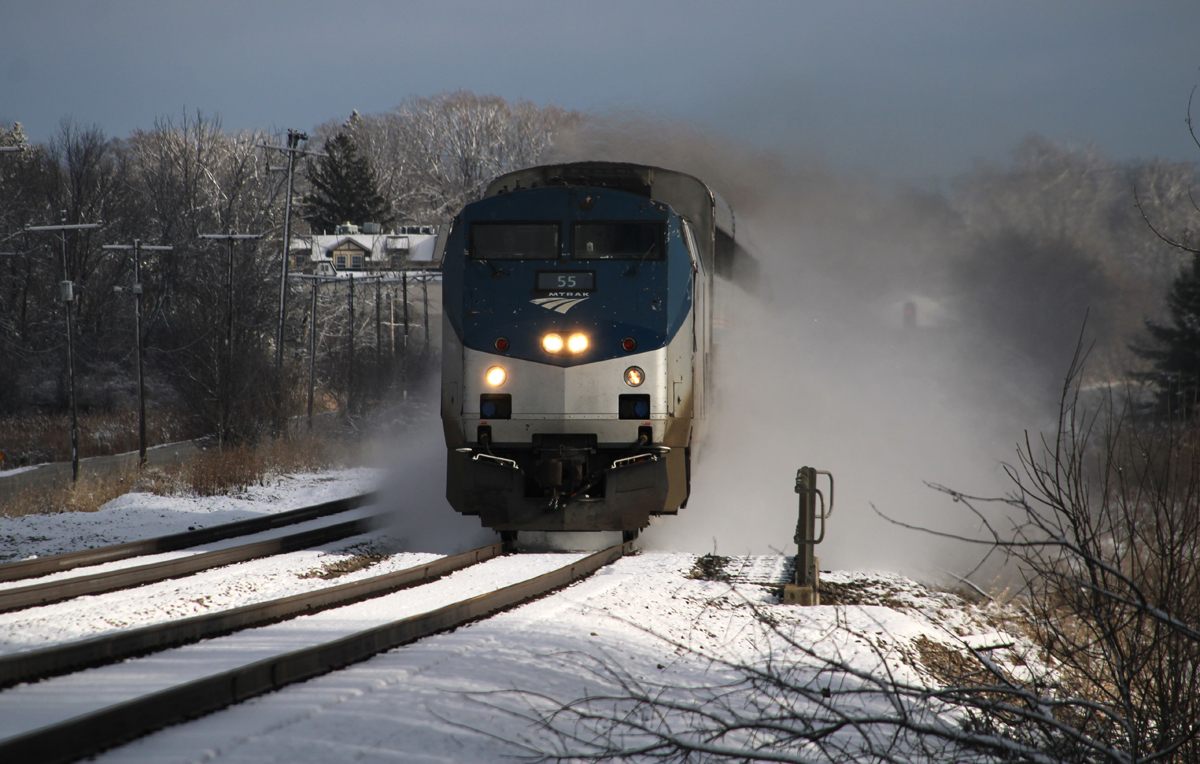


The past 54 years of AMTRAK has been riddle with such problems. When will we learn that rail passenger service in the hands of quasi-government bureaucrats and congress will never succeed.
They should have done what Metra did & purchase rebuilt SD 70’s.
GALEN — I’ve seen many of these rebuilt SD70’s on METRA MILW West and North Districts. Strange as it may seem, they look better than the various models designed to look good on passenger trains.
Just buy freight locomotives and develop a baggage/HEP car to power the consist.
The locos would operate in nearly all weather climes and a separate HEP car would be interchangeable if trouble occurs.
You probably were not around when Amtrak had to use HEP cars when it was transitioning from GG1s pulling new Amfleets. It was just a real goat rope with the units failing all the time. Was able to see 2 cars fail at NYP the same evening..
I don’t think the problems are with the generator in the locomotive but with the power transmission through and between cars. “Head-end power” is a descriptor of the system, not meant to imply that the problem was at the “head-end.”
Appears it was a failure of a HEP cable. Do Amtrak locos carry extra cables? Oh wait just another spare parts that bonus will not call for extra cables??
Indeed. And any replacement equipment ten years away or more. And no substantial refurbishment program. Anyone who thinks the long-distance trains can survive until (if) new equipment arrives is delusional.
Amtrak gets its wording from 1984. Assessment is the new word for failure.
Here we go again. You know, it’s not yet winter. This is still, technically, autumn. Here in the Great Lakes, we have had some cold and some snow, but nothing really to complain about.
When I was at DEN Denver International Airport last Friday, I looked at the monitor. Zero cancelled flights, a few flights down by some number of minutes here or there. When winter does come, quite possibly DEN will turn into a hot mess in the cold weather. Has happened before, will happen again. But Amtrak already has taken a dive and it’s only December 9th.
Yes, air travel is generally reliable… until it isn’t. My daughter and some of her friends booked a flight to Italy last September. One of the connecting flights had an engine problem and had to be grounded. They were delayed an entire day. They “camped out” at the terminal until their next flight was ready.
In another episode, my brother and his son were to fly home from Cleveland Hopkins. A snow storm hit and canceled flights for 3 days. I got them seats on the Lakeshore and the Chief so they could make it home in time for my brother’s own birthday party.