WASHINGTON — If you thought Federal Railroad Administration grant programs for things like passenger service, shortline track maintenance, and grade crossing elimination projects would be the least likely place to become a front in the culture wars, think again.
Transportation Secretary Sean Duffy on Jan. 29 issued a memo ordering Department of Transportation agencies to “identify and eliminate all orders, directives, rules, regulations, notices, guidance documents, funding agreements, programs, and policy statements” that the Biden Administration issued and relate “in any way to climate change, ‘greenhouse gas’ emissions, racial equity, gender identity, ‘diversity, equity, and inclusion’ goals, environmental justice, or the Justice 40 Initiative.”
Duffy subsequently issued an order “ensuring reliance upon sound economic analysis in Department of Transportation policies, programs, and activities.” Despite the dry title, the order has caught the attention of major media outlets.
Why? A portion of the memo says preference should be given to funding projects that are located in “communities with marriage and birth rates higher than the national average.”
Wrote the Daily News in a typical New York City tabloid headline: “Trump to New York: Want money for trains, tunnels, and bridges? Get married and make babies.”
The order also prohibits recipients of DOT funding “from imposing vaccine and mask mandates” and requires “local compliance or cooperation with Federal immigration enforcement.”
But the order also contains provisions that would seem to threaten FRA funding for Amtrak, CRISI grants, and grade-crossing elimination projects. Specifically, the order says funding shouldn’t go to projects that:
- Would depend on continuous or future DOT support or assistance for improvements and ongoing maintenance.
- Are “purely local in nature and unrelated to a proper Federal interest.”
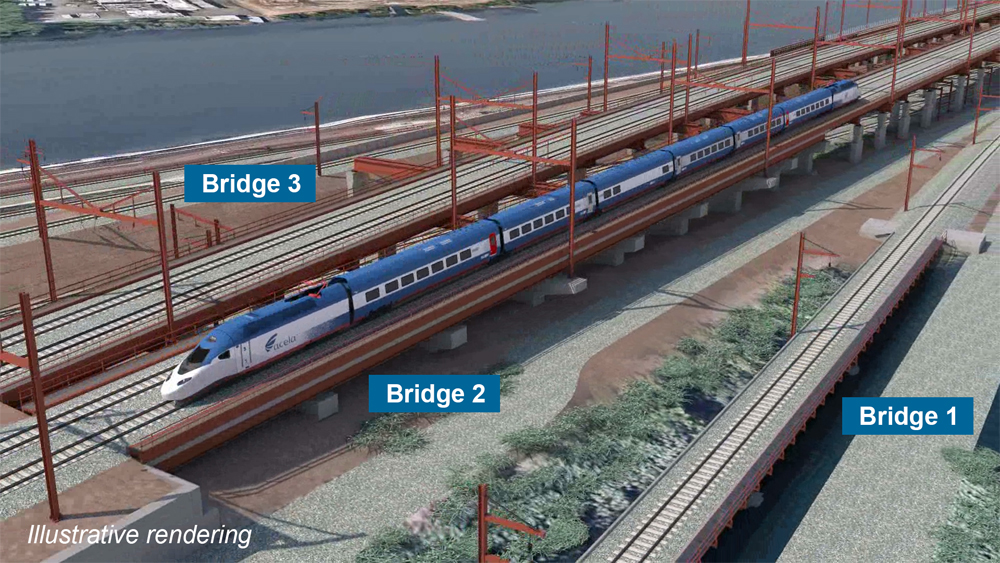
Amtrak’s Northeast Corridor receives ongoing federal funding for maintenance and replacement projects, such as the Baltimore & Potomac (B&P) Tunnel in Baltimore and the Gateway Program in New York and New Jersey.
CRISI grants support local short line railroad infrastructure programs, including bridge projects and track work. Chuck Baker, president of the American Short Line and Regional Railroad Association, is not worried about the new funding criteria. “It’s an interconnected freight rail system and there is an inherent federal interest in the whole thing working well, most certainly including short lines,” Baker says. “I think short line projects will be very competitive under these criteria.”
The benefits from eliminating grade crossings, meanwhile, flow primarily to local communities.
What will the impact of the orders be on various FRA programs? That’s not clear.
Former Pan Am Railways President David Fink, President Donald Trump’s nominee to lead the FRA, has not yet been confirmed by the Senate. The FRA referred questions to the Department of Transportation, which did not respond.
An Amtrak representative said the railroad was working on a response to questions from Trains News Wire. Trains also sought comment from the Association of American Railroads.
Note: Updated at 7:20 p.m. Central with comment from ASLRRA President Chuck Baker.