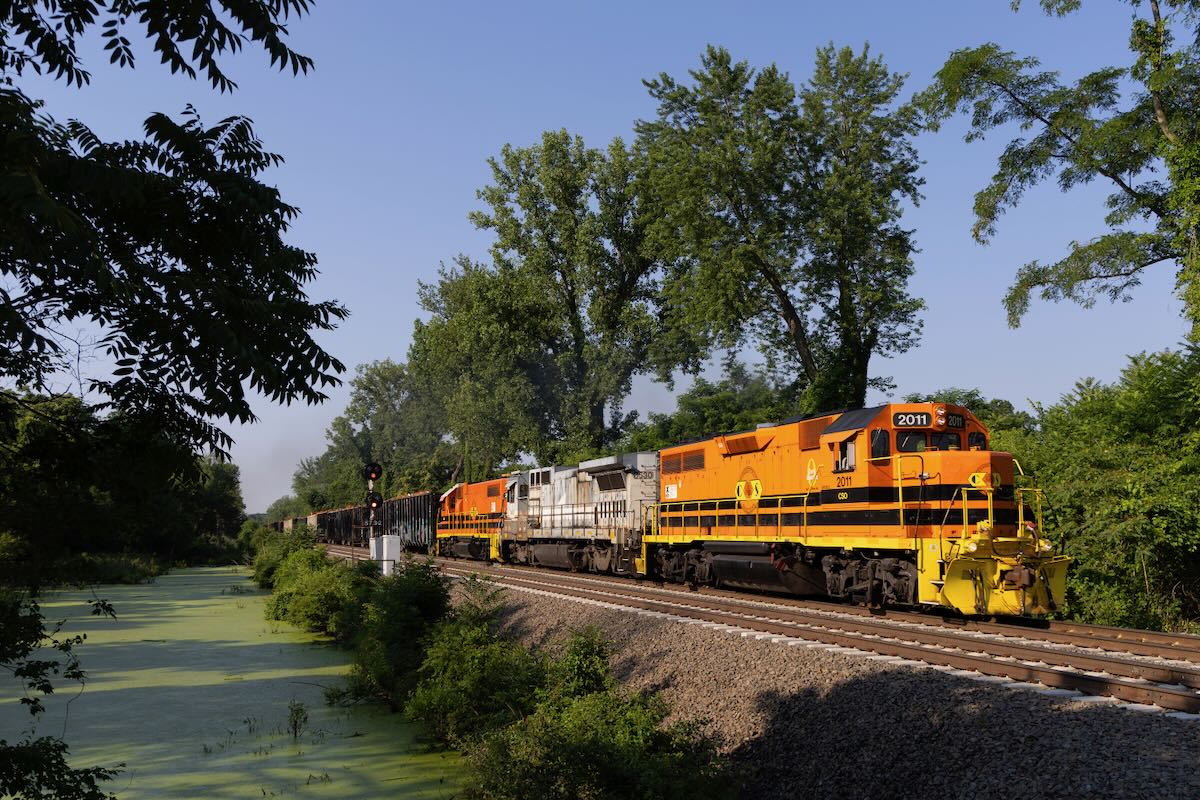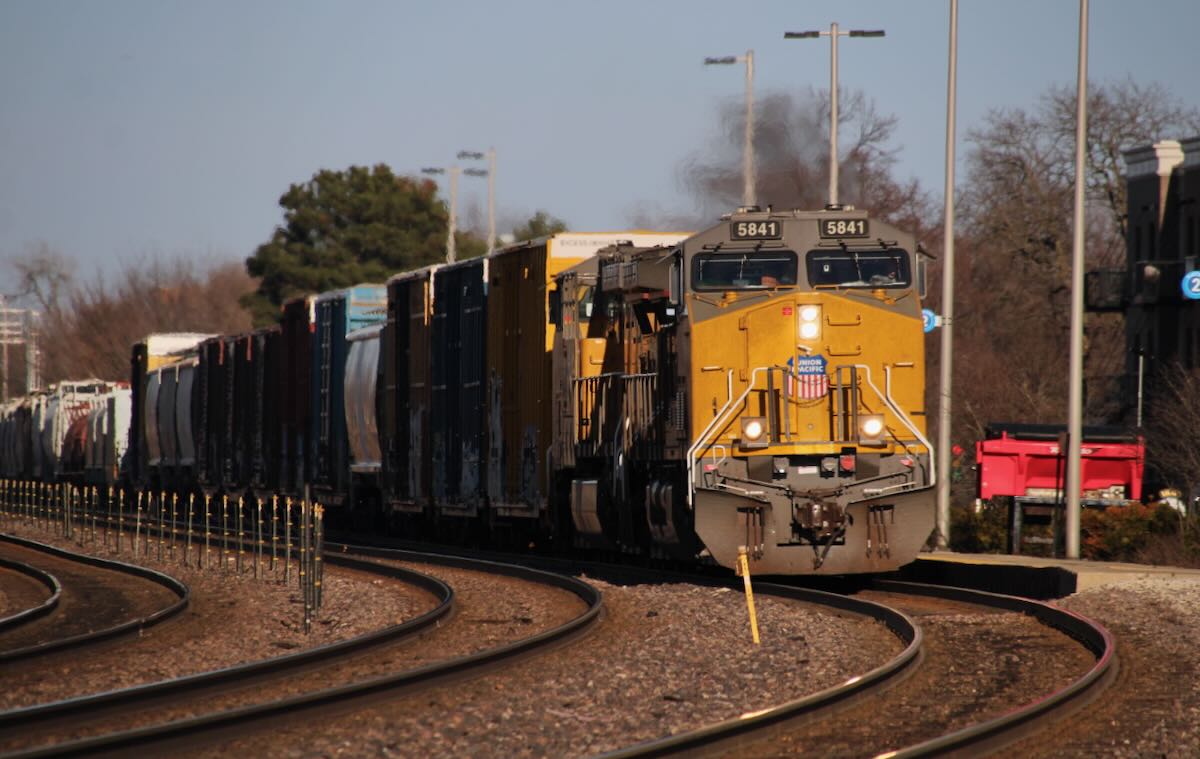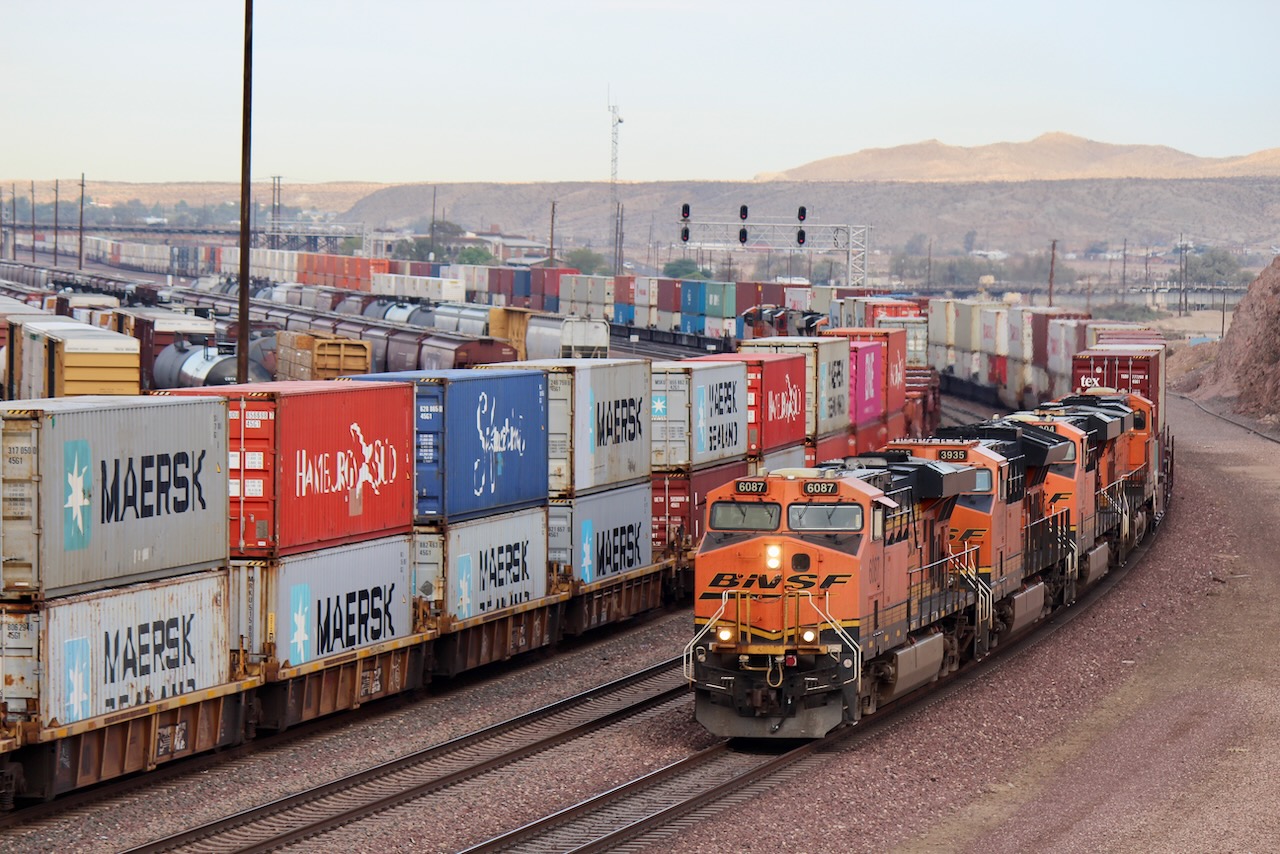


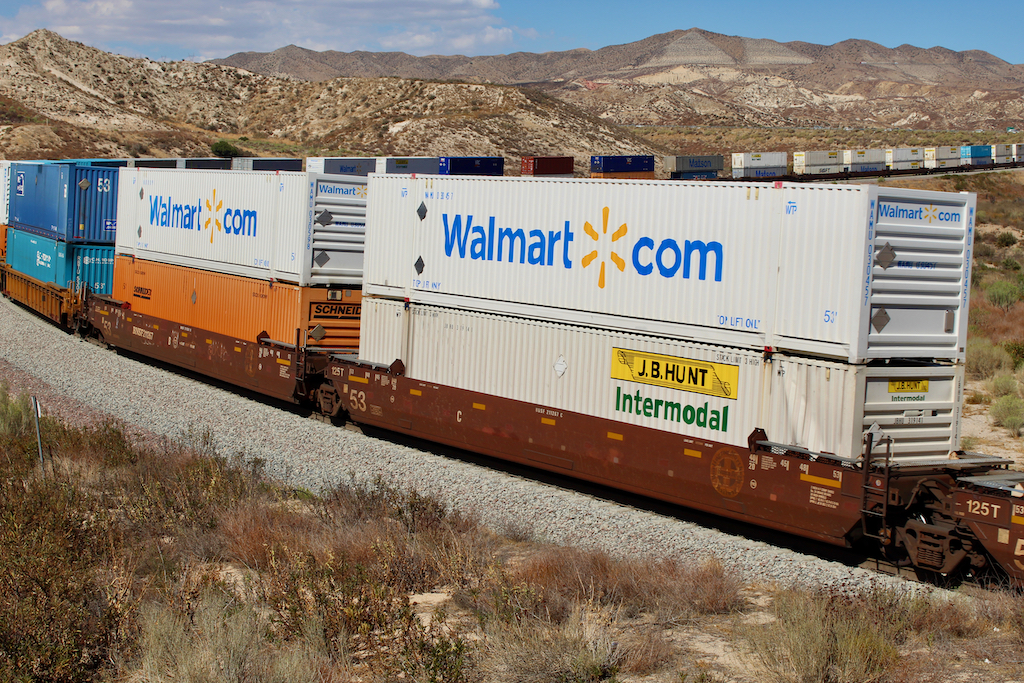
There’s no question that autonomous trucks pose a threat to the railroad industry. They’re not here quite yet, but TuSimple is proving the concept with driverless rigs that are making revenue runs on highways in the Southwest. And other companies are working to develop battery-electric trucks.
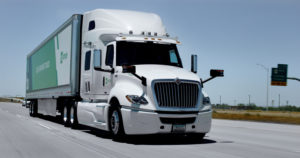
If proven feasible and deployed in sufficient numbers, driverless electric trucks would not only provide better service than railroads. They’d be cheaper, too. This combination of potential developments prompted an investment firm to issue a dire prediction: The sun is setting on the railroad industry.
ARK Investment Management argues that widespread adoption of autonomous electric trucks will put railroads at risk of bankruptcy — or worse.
“We believe that during the next five years, autonomous electric trucks will commercialize and take share from rail operators with more cost-effective, door-to-door service,” ARK wrote in a 2020 white paper about the impact of disruptive technology. “If autonomous vehicles proliferate into various form factors, including flying drones and rolling sidewalk robots, we believe freight rail companies will have trouble competing with antiquated technology tied to dedicated infrastructure assets. ARK wonders which, if any, freight rail operators will survi
ARK’s report lumped railroads in with four other risky bets, including physical bank branches, brick-and-mortar retail, the auto industry, and providers of cable and satellite television. (As an aside, I haven’t set foot in my bank branch or the mall in years, and I cut the cord with my cable TV service a little over a year ago. So in my world three out of ARK’s five predictions seem spot on.)
Not everyone agrees. In his annual letter to shareholders, Berkshire Hathaway Chairman Warren Buffett took the opposite view while recalling what led his company to acquire BNSF Railway a dozen years ago. “And here I’ll venture a rare prediction: BNSF will be a key asset for Berkshire and our country a century from now,” he wrote.
The Oliver Wyman consulting firm has studied the impact driverless trucks might have on railroads and concludes the future likely is closer to Buffett’s vision than ARK’s. That’s the good news.
The bad news is that intermodal traffic would be highly susceptible to diversion once trucking costs fall below rail’s costs. Intermodal customers like J.B. Hunt, Hub Group, and UPS would put their loads on the road, killing the rail industry’s growth engine.
Wait, you say. How could highways handle all that intermodal traffic? Oliver Wyman contends a massive shift of intermodal traffic wouldn’t have much of an impact on rural sections of interstate highways. But there certainly would be more congestion on urban highways due to ongoing population and traffic growth. And intermodal traffic couldn’t escape this phenomenon, either, because of the need to dray containers from intermodal terminals to customer locations in urban areas.
Ultimately, railroads would lose their price- and service-sensitive intermodal traffic to driverless trucks. So railroads would have to fall back on carload and bulk business. Aside from chemicals, no carload segment has shown consistent growth over the past decade. But since carload and bulk business is highly profitable, it could sustain the industry for decades despite a lack of growth, Oliver Wyman argues.

Consultant Rod Case says railroads would not go away. Trains would likely become low-speed land barges that haul low-value commodities that aren’t particularly service sensitive. Railroads wouldn’t be dead, Case argues, just increasingly irrelevant.
I don’t gravitate toward doom and gloom outlooks, and tend to agree with Yogi Berra, who famously observed that “it’s tough to make predictions, especially about the future.” But change can move in unpredictable ways and come more quickly than expected.
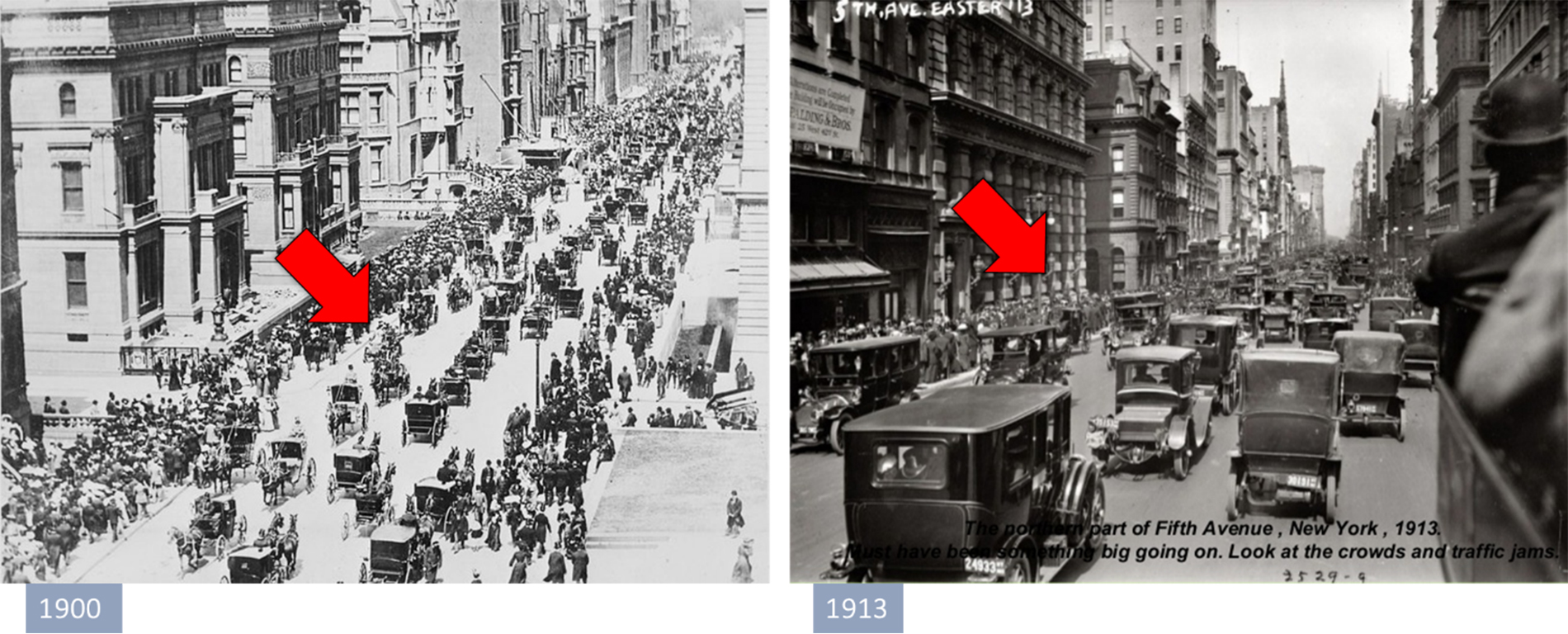
A case in point would be photos of the New York City Easter parade taken on Fifth Avenue in 1900 and 1913. In the 1900 photo, you see lots of horse-drawn carriages and just one automobile. This is flipped in the 1913 image: You see lots of cars and only one horse.
Skeptics in 1900 probably cited all sorts of reasons that cars would never replace horses. They’re too expensive, they’re unproven and unreliable, and there aren’t enough gas stations or roads. We all know how that turned out. Yet parallel arguments are being made today about driverless trucks and battery electric technology.
The town where I live, Westfield, Mass., is nicknamed the Whip City because its factories were once leading suppliers of buggy whips. Of the 40 or so whip factories that once thrived here, only one remains in business. They were doomed to obsolescence once the internal combustion engine put horses out to pasture.
Let’s hope railroads don’t suffer the same fate.
You can reach Bill Stephens at bybillstephens@gmail.com and follow him on LinkedIn and Twitter @bybillstephens
Share this article