





Real or fake?
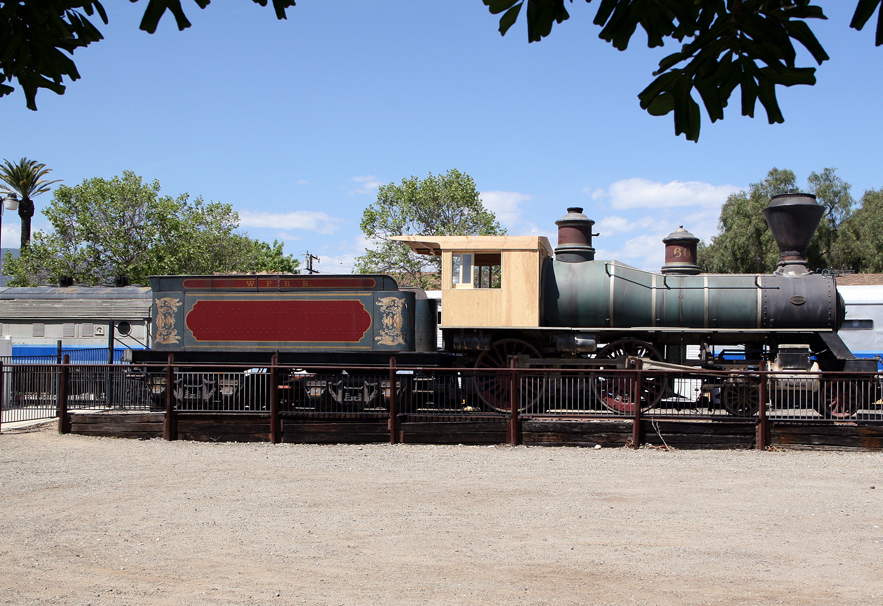
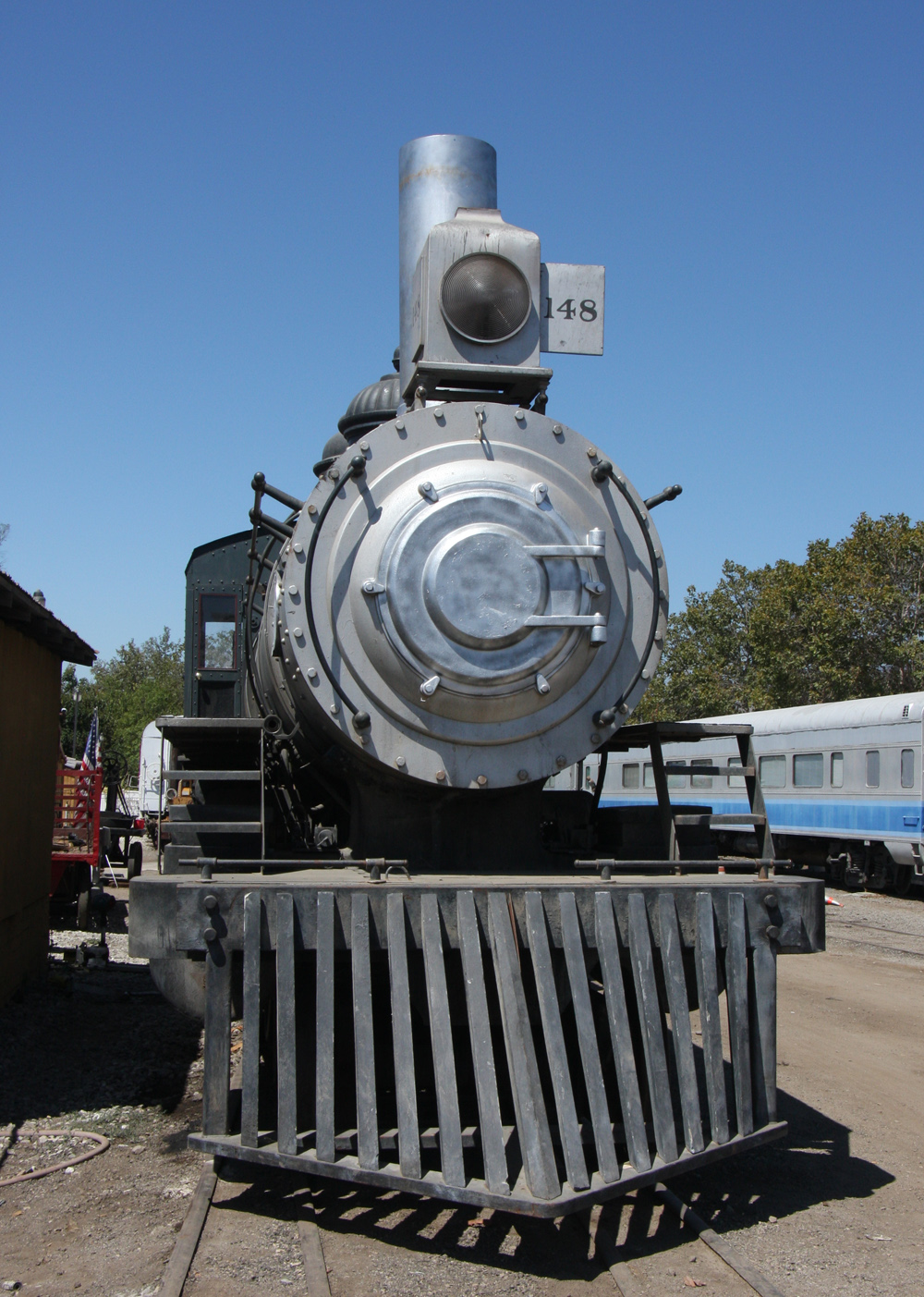
It’s always exciting to come across stuff you didn’t know existed. So, imagine my surprise when driving through Fillmore, Calif. one day and spying not one but two steam locomotives: vintage ones at that!
Sunning themselves in the small yard of a tourist railroad were a pair of 19th century creatures that at first glance looked genuine enough, but I had my doubts. I had seen them somewhere before but just wasn’t sure where.
The cab of the 60 was suspicious. It was made out of what looked like plywood. And there was no exterior piping on the boiler. Many streamlined engines had outer shells hiding the intricacies of steam propulsion, but not this one. The valve gear looked a little strange, as well.
The other locomotive, No. 148, was odd, too. Look at the cowcatcher. Where was the coupler pocket and coupler? At this angle the frame looked more like a flatcar that had a boiler slapped on it.
Then it hit me. They weren’t real steam engines, they were Hollywood props built for the 2013 movie Lone Ranger, a big-budget production that as I understand it, lost money at the box office. A shame, because while nobody was going to confuse this work with past movies, or the TV show, standing on its own, it wasn’t bad. As a matter of fact, I rather enjoyed it.
The faux steam locomotives were the product of a Southern California machine shop, which made them to order for the movie. For each “steamer,” a small diesel engine was installed in the tender to make them move. When shooting on location on a specially made rail line in New Mexico, a diesel switcher was tacked on to the rear of the train, out of sight of the camera, as well. Special effects people during the filming and in post-production made them come alive.
So, are they ‘real’ locomotives? Of course not. But I’m glad I came across them that day and photographed them. They were built for a specific job and worked well. If you happen to see the movie, sit back, and enjoy it, and those fake steamers, as well.


The “Hall” class locomotives pulling the “Hogwarts Express” at Universal parks in Orlando are beautiful 1:1 resin reconstructions of the real thing.
There are enough restorable “Hall” locomotives that they COULD have used those. But the park didn’t want the responsibility (or the liability) of maintaining real vintage steam locomotives.
The sad part to me is that the side the customers don’t see is not complete. But I had to see “backstage” photos before I realized that – in the parks proper you can’t tell.
Small world. I knew one of the carpenters who worked on the “Lone Ranger” set in New Mexico, including the train. He got a real kick out of the gig, and was proud of the work he did on the film.
Disney came to clovis nm and removed the throttle and other components from the AT&SF engine 9005 on display in clovis nm for this film and i thought it was a good movie
“…and other components” I wonder where those 4 driving wheels and the 4 pilot wheel assembly came from???
I saw that movie and it was the worst Lone Ranger epic ever. However, the train race at the end was fantastic and the film and editing were superb. Loved the horse running through the train. The last 15 minutes were worth the wait.