Master Model Railroader Gerry Leone is back to give us an exclusive tour of the progress he’s made on the famed Bona Vista HO scale (1:87.1) layout! You’ll want to watch this update to see the latest work on a layout that’s featured in the pages of Great Model Railroads 2026 special issue magazine, now […]
Read More…
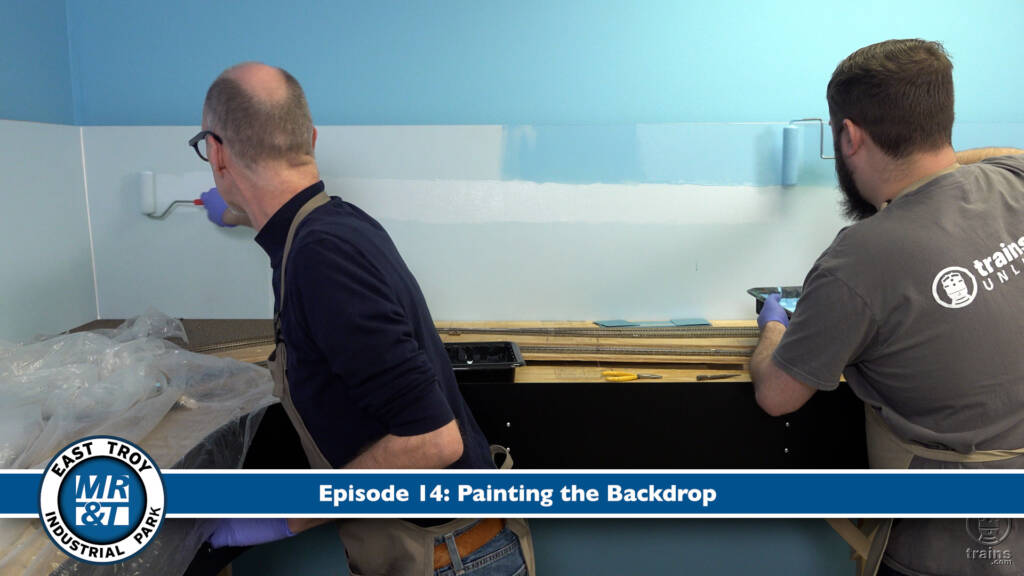
Painting the initial backdrop installation a single shade of blue was just fine to get things started on the HO scale (1:87.1) East Troy Industrial Park project layout. However, David and Bryson share an easy technique for blending the background sky color with the adjacent wall color, and set the stage for those stunning photos […]
Read More…
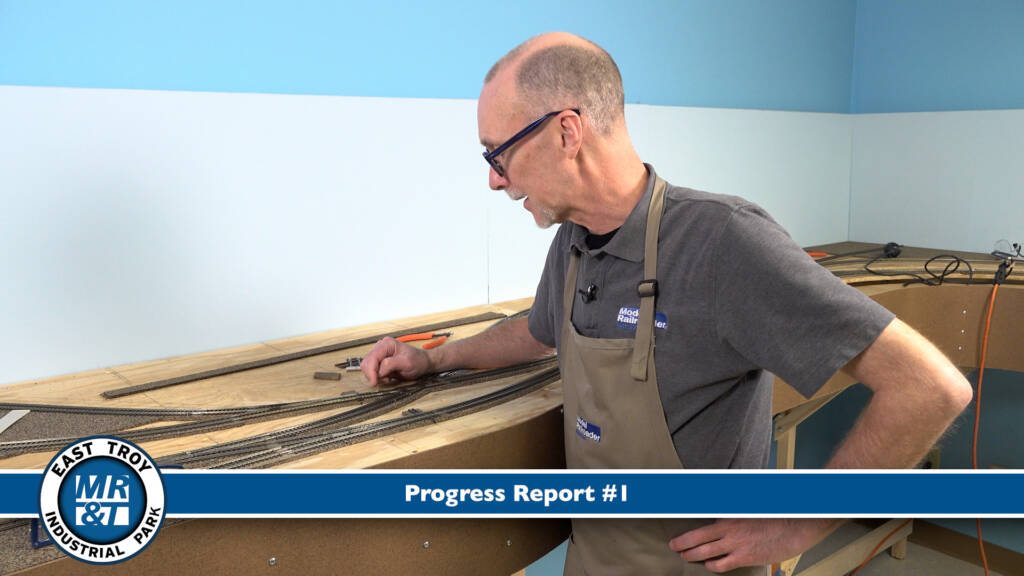
Now that trains are running on the HO scale East Troy Industrial Park (ETIP) project layout, David Popp hosts this BONUS video to share some of the behind-the-scenes efforts and design considerations the MR crew still needs to tackle. As so many model railroaders can attest, there’s no such thing as “finished” layout…especially when structure […]
Read More…
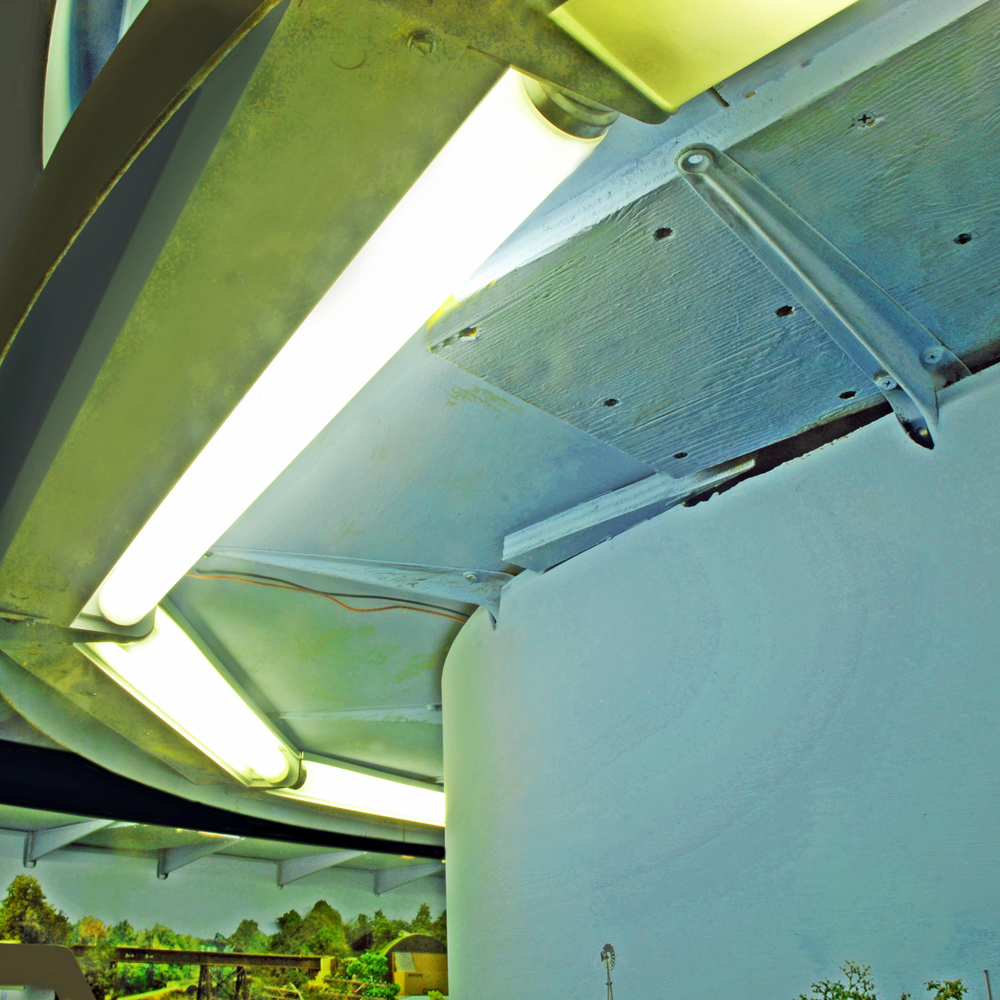
Q: I have a bedroom sized N scale railroad with a four track staging/fiddle yard on one wall. I would like to run a branch line to a quarry over the staging, but I am concerned about the gradient to get the tracks to the right height. I will need about 6″ clearance for my […]
Read More…
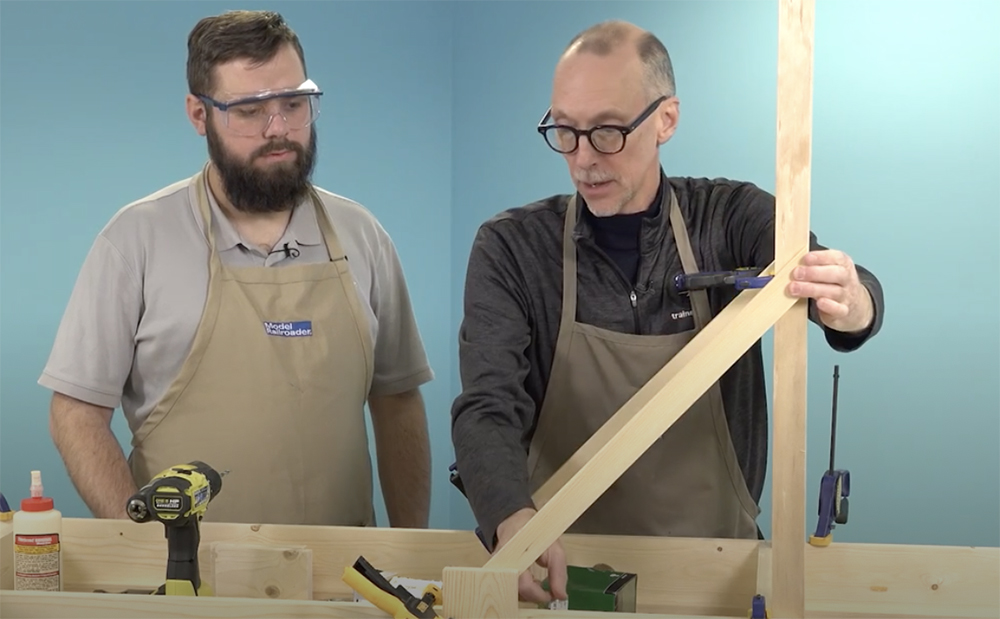
Once we had the L-girders built, it was time to turn our attention to adding the legs and support bracing for the layout. We constructed the legs as simple subassemblies with their own cross bracing. It all bolts to the L-girder frames using ¼” carriage bolts, wing nuts, and washers. We used more dimensional lumber […]
Read More…
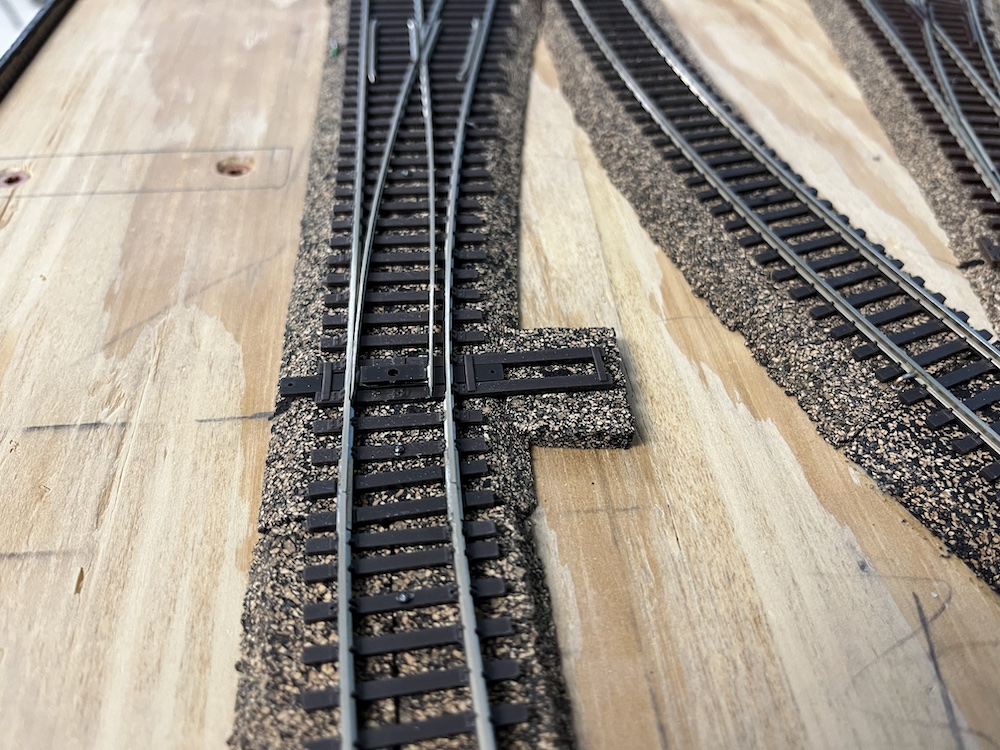
Learning how to install roadbed at a turnout, a place where tracks meet or diverge, is a valuable skill for all model railroaders to have. Installing strips of cork or foam roadbed for straight or curved tracks is a straightforward process. Mark the center line, split the roadbed sections into flexible strips, and glue them […]
Read More…
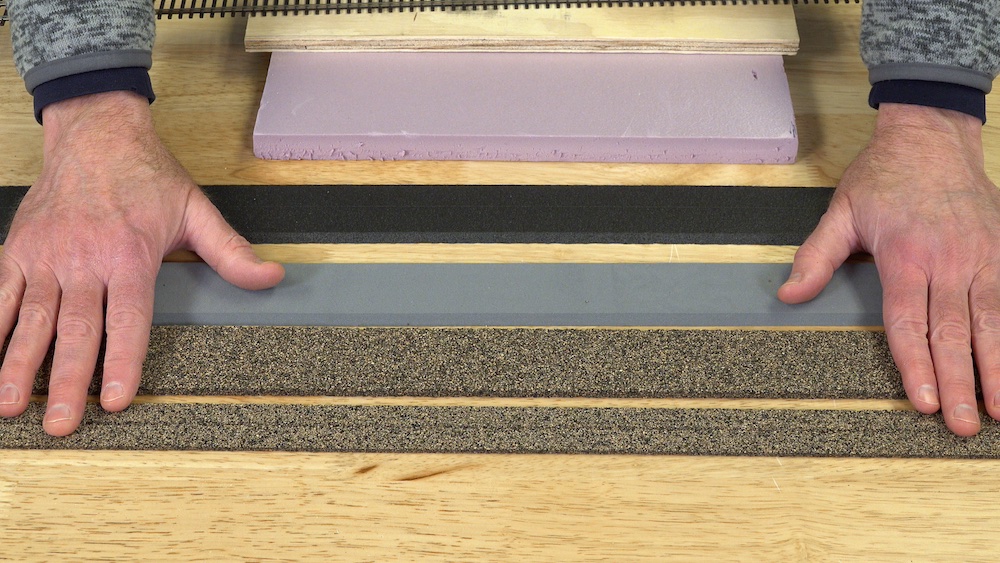
For model railroaders choosing a separately applied roadbed for laying track, two popular options dominate: cork and foam. Each has its own strengths and weaknesses, as well as impacting factors such as ease of installation, durability, and realism. Let’s dive into the details and help you make an informed decision on cork vs. foam roadbeds. […]
Read More…
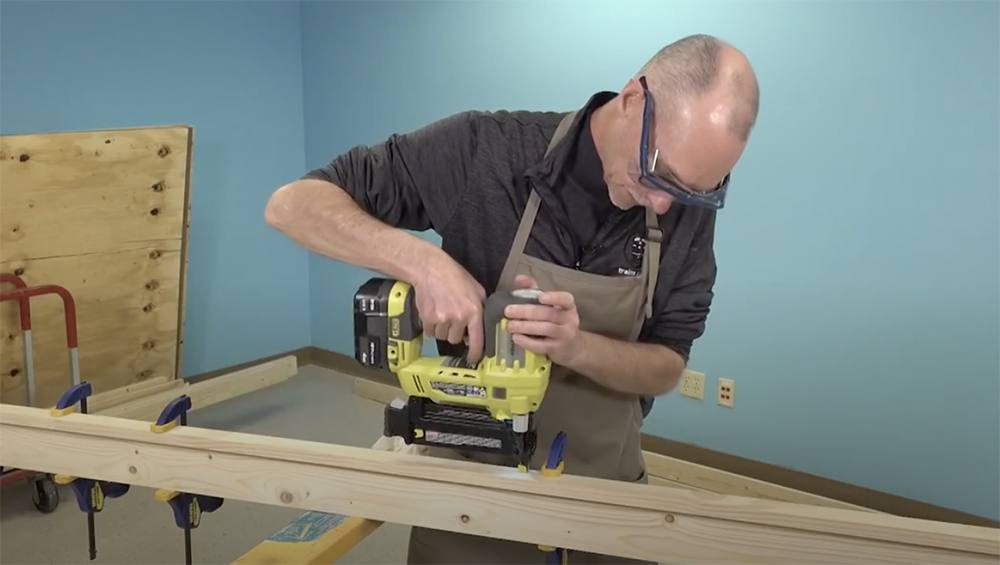
From tabletop, to shelf, to open grid, there are a lot of different methods you can use to build model railroad benchwork. For our HO scale East Troy Industrial Park project layout, we used a combination of two methods, cookie cutter and L-girder, to make solid, stable benchwork. While not exactly framing for a layout, […]
Read More…
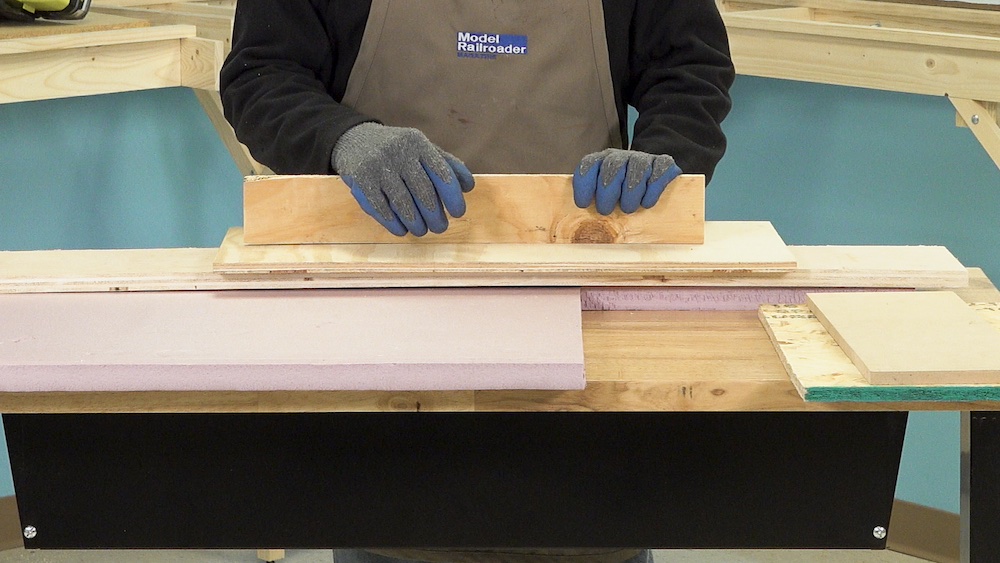
“Which type of subroadbed is right for me?” It’s a question that is especially asked by beginners. The subroadbed is the material that you place under your roadbed, track, and often scenery. It serves as the foundation for your model railroad, so choosing the correct material is very important. Before evaluating good subroadbed options, let’s […]
Read More…
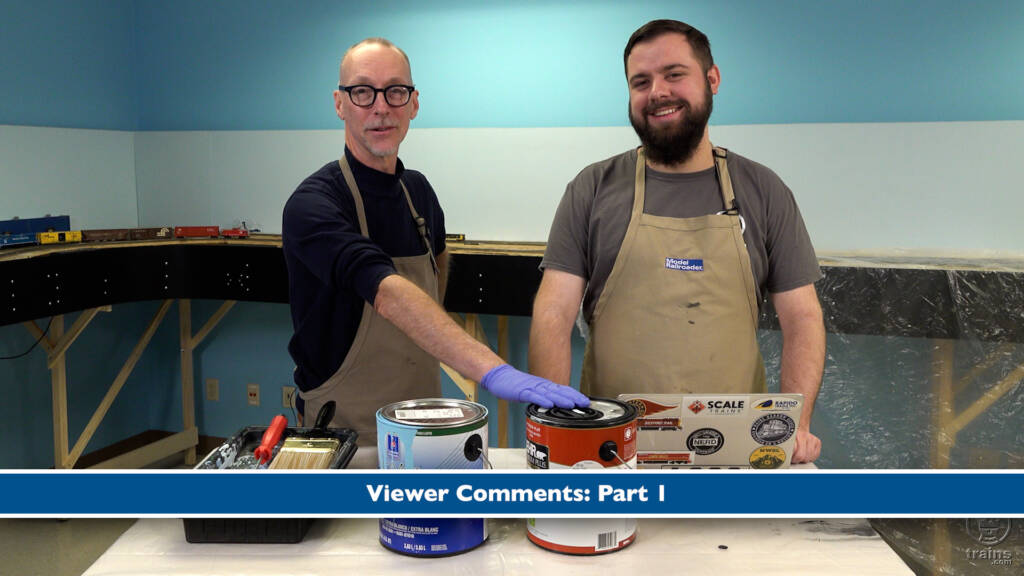
In this special episode, hosts David Popp and Bryson Sleppy take a moment to address a few questions from viewers like you! As the work on the HO scale East Troy Industrial Park (ETIP) project layout has forged ahead rapidly, we’ve certainly appreciated the wide assortment of inquires you’ve submitted in the Comments field. Keep’em […]
Read More…
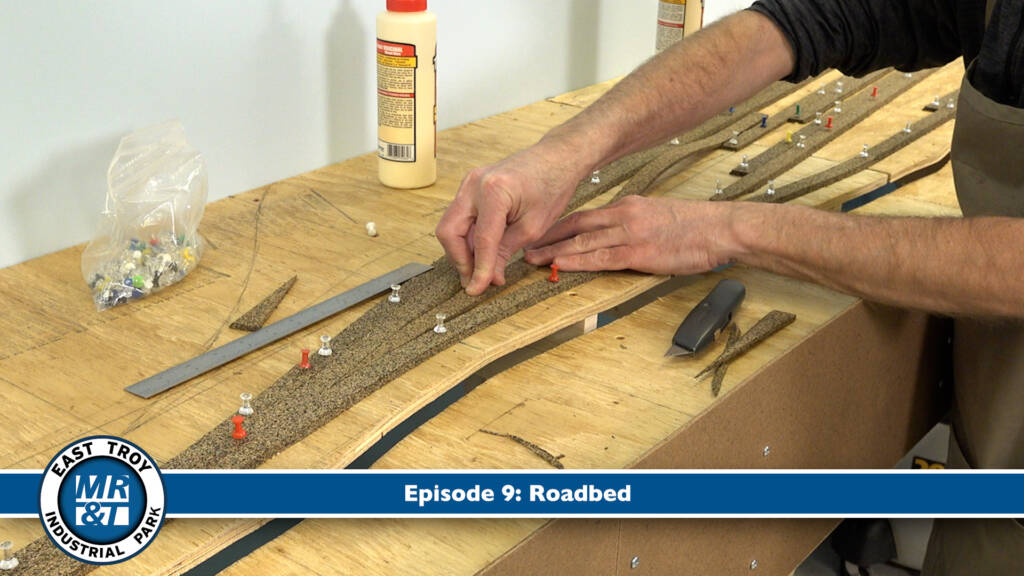
Hosts David Popp and Bryson Sleppy work together to install the roadbed sections used to support trackwork for the HO scale East Troy Industrial Park (ETIP) project layout. While a variety of roadbed material is available for all scales and track gauges, the guys focus on the process for adding strips of HO scale (1:87.1) […]
Read More…
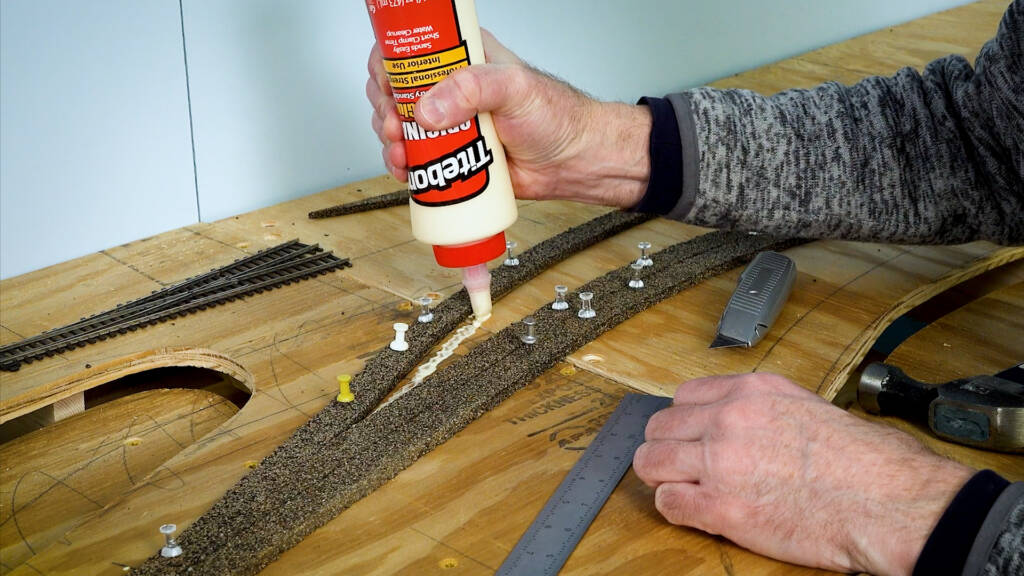
Installing roadbed at turnouts | Watch and learn how to lay cork roadbed material under track switches of any scale or gauge. Follow along with David’s helpful tips and tricks, and you’ll be well under way to providing a smooth and level base for under the most critical locations of your model railroad trackwork! Be […]
Read More…